Choosing a lift – 15 good advices
There is a lot that can go wrong when you use a lift at work. There are many factors that come into play when choosing the right lift and working safely. Here, we have collected some good advice from the Norwegian Occupational Safety and Health Administration and our own tips for choosing the right lift.
– What work will you do?
– What is the minimum permissible lifting capacity the machine must have?
– What is the required height and reach?
– When in the work is the lift necessary, and what will the ground conditions or support structure be like at this time? Is it rough, processed, loose gravel, finished surface, etc.?
– How is access to the area? How is it possible to deliver/pick up a lift and to drive it to and from the workplace?
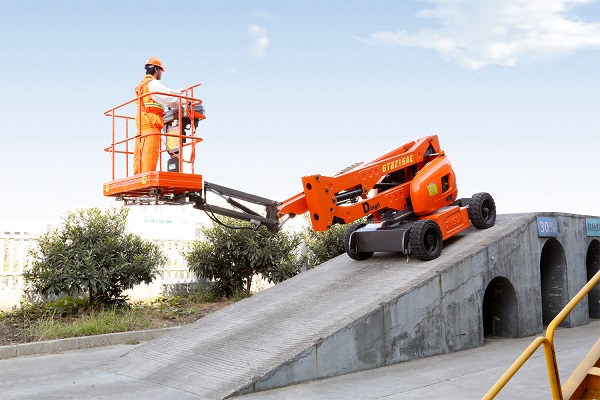
– What is the terrain and the slope of the hill that the lift must overcome to get into working position? Will the operator have a good overview, and is the area sufficiently secured to be able to maneuver the lift?
– Do power lines run over the site, or are there hazards to be avoided underground?
– How much space is there for positioning and operating the lift at the workplace?
– What is the maximum bearing capacity of the ground in the work area and along the route to and from?
– How many people will be lifted?
– Can the lift have to be moved/changed position in the lifted position?
– Are there structures above the workplace against which the operator could be pinched or trapped?
– If there are materials to be lifted, what weight/shape/length are the materials?
– What interfaces will there be with other vehicles and pedestrians, and are there any unusual challenges you need to take into account, e.g. plane, rail traffic, public road?
– What type of fuel is allowed on site and where will refueling take place?
We supplement the advice above with some typical mistakes lift users make:
– The lift must be level. Ensure correct positioning of the lift, do not exceed the weight limit in the basket and try to distribute the weight in the basket as evenly as possible.
– The surface must withstand the weight of the lift and any supporting legs. If the ground is weak, the lift or its support leg can sink into the ground and create an imbalance – and in the worst case, overturn.
– The cause of many accidents is working alone. If the person working in the basket is injured, it is very important that the person gets help as soon as possible.
– It may be a good idea to use fall protection equipment when working at height, but you should not attach yourself anywhere in a lift. Check where the lift’s attachment point is before using it.
– Many self-propelled lifts can be driven relatively quickly while standing in the basket. Even a small unevenness in the ground can create great instability when the curve is raised. In the worst case, you can create a “catapult effect” and be thrown out of the basket.
– Some creative souls modify the lift, change settings and build on the lift. This must never be done! Even small changes can create major challenges for the lift’s stability and safety.
– The Working Environment Act requires that employees have satisfactory training and practice. Read more about our lift course and fall protection course here: www.instantkurs.com